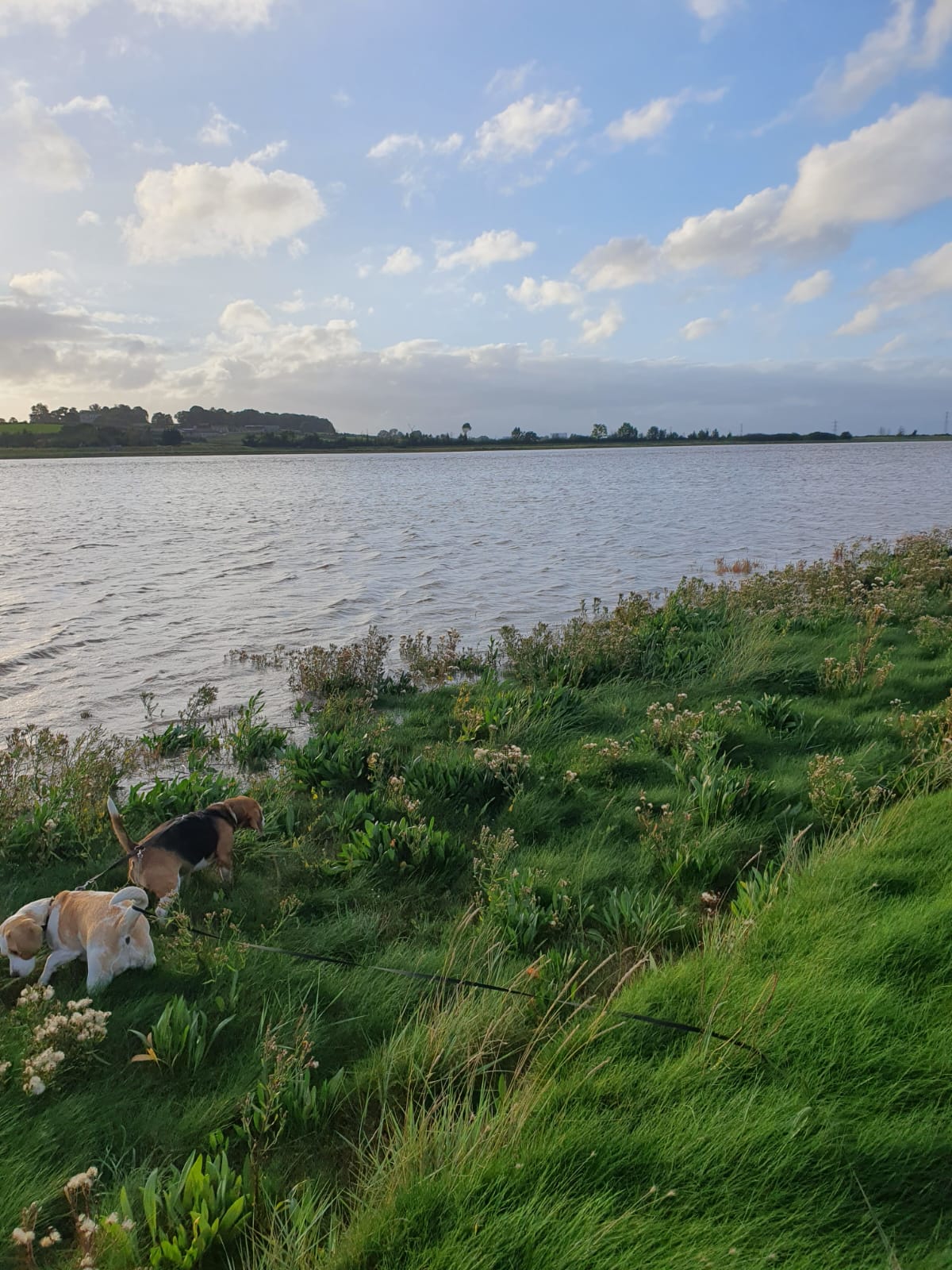
People sometimes assume the farm and the workshop are the same place. They are about as different as two places can be.
The flock lives at Pawlett Hams, near Bridgwater. It is tidal grazing marsh on a Site of Special Scientific Interest, and the River Parrett runs along the edge of our land. When the tide is in you can paddle in it. When it is out you get the Somerset mud that everyone round here complains about and nobody actually minds.
It is not pretty land in the postcard sense. It is flat, wet, open and windy, and it floods. But it is clean. There are no pesticides on it, no herbicides, and nothing draining into it from anywhere else. The grass the sheep eat has had nothing done to it at all.
That shows up in the animals. Our flock is noticeably healthy, their feet are good and their fleeces come off in excellent condition, and we put most of that down to the ground they stand on. The sheep themselves would tell you it is the extra buckets of food, and we let them think that.
And the workshop
The wool is grown at Pawlett Hams. It is worked somewhere else entirely, in our workshop at Milverton, which is where the washing, picking, carding and felting all happen.
We make the distinction because it matters for traceability. When a Sheepkind piece says it came from a particular sheep, we can tell you which field that sheep was standing in, and which bench the fleece was worked on. Not many wool products can say that, and it is only possible because both ends of the process are ours.
Grazing that pays its way
There is a nice symmetry to grazing a nature reserve. Marsh like this needs animals on it. Left alone it scrubs over and the wading birds that depend on open ground lose it. Sheep keep the sward short, and in return they get land that has never been sprayed.
Everything we sell starts there.