Sustainability
No sheep is killed
for any of this.
Our sheep were rescued from the meat trade and will live out their natural lives here. Shearing is something they need anyway, once a year, for their own comfort and health. The wool is what comes of it.
Rescued, not farmed
Saved from the meat trade since 2022. None of them leaves.
Grazed on an SSSI
Land that has had no pesticide or herbicide on it at all.
Processed by hand
In our own mini mill. Nothing sent away, nothing blended in.
Traceable to one sheep
Not a flock average. One named animal, every time.
The land does the work
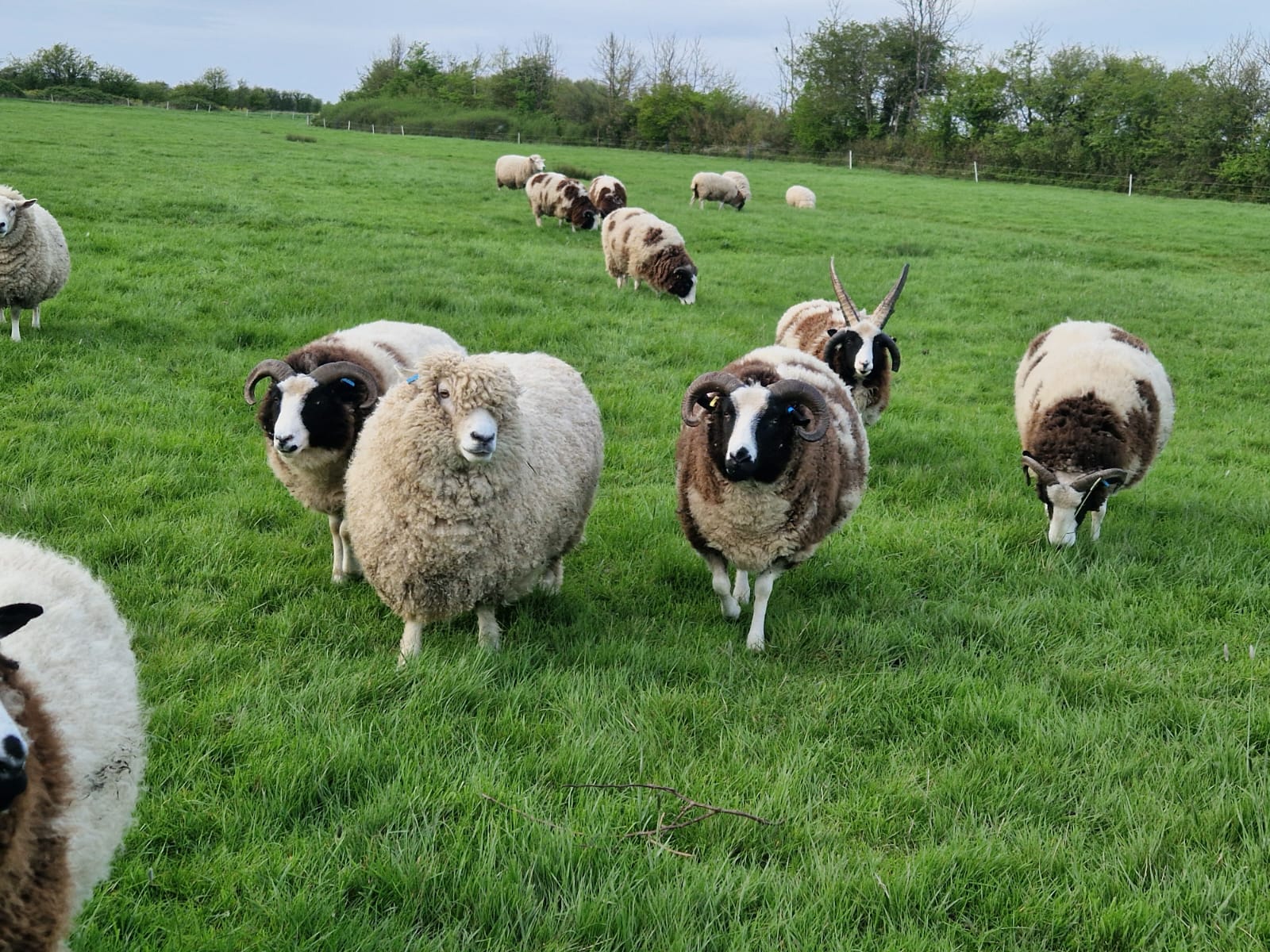
The flock lives at Pawlett Hams, near Bridgwater. It is tidal grazing marsh on a Site of Special Scientific Interest, and the River Parrett runs along the edge of our land.
It is not pretty land in the postcard sense. It is flat, wet, open and windy, and it floods. But it is clean. There are no pesticides on it, no herbicides, and nothing draining into it from anywhere else. The grass the sheep eat has had nothing done to it at all.
That shows up in the animals. Our flock is noticeably healthy, their feet are good and their fleeces come off in excellent condition, and we put most of that down to the ground they stand on.
Grazing that pays its way
There is a nice symmetry to grazing a nature reserve. Marsh like this needs animals on it. Left alone it scrubs over, and the wading birds that depend on open ground lose it.
Sheep keep the sward short, and in return they get land that has never been sprayed. The conservation and the wool are the same activity, not two things balanced against each other.
What we are not claiming
We are a small farm and a small mill. We have not measured our carbon footprint, we are not certified organic, and we are not going to tell you that buying a bag of wool offsets anything.
What we can tell you is exactly where it came from, which sheep grew it, what was and was not put on the land, and who washed it. That is a smaller claim than most, and it is one we can actually stand behind.
Wool is also, left to itself, a material that lasts decades and then breaks down. We sell it undyed wherever we can, and the two dyed colourways we do sell are dyed here rather than bought in.
Things made to last a lifetime are the point. If something of ours wears out, write to us before you throw it away.
See how the fleece is handled.
From a twenty-four hour soak to a finished garment, every step by hand in our own mill.